Scandinavian Furniture Style: Key Features, Layout Ideas, and Iconic Pieces
Scandinavian furniture design has been captivating people for several decades with its balance of simplicity, functionality, and warmth. Far from being limited to light wood and white interiors, Nordic design is rooted in a true philosophy: creating beautiful, useful, and durable furniture designed to support everyday life.

Today, Scandinavian furniture fits seamlessly into contemporary interiors, as well as into hotels, restaurants, vacation rentals, and professional spaces seeking an atmosphere that is both elegant and welcoming.
At Atelier Rinovo, this aesthetic takes on a special quality when expressed through vintage, secondhand, or one-of-a-kind pieces. A teak sideboard, an armchair with organic lines, or a designer chair can thus become the starting point for a unique interior design.
What is the Scandinavian style in interior design?
The Scandinavian style refers to a family of design aesthetics originating primarily in Denmark, Sweden, Finland, and Norway. It gained particular prominence in the 20th century through a new approach to furniture design that emphasized functionality, simplicity of form, and the quality of materials.
Great Nordic designers such as Alvar Aalto, Arne Jacobsen, Hans J. Wegner, and Poul Henningsen have helped spread awareness of this approach far beyond the Nordic countries. Their work often combines technical innovation, craftsmanship, and a focus on comfort.
Scandinavian furniture is recognizable in particular by:
- clean, easy-to-read lines;
- often organic and rounded shapes;
- a strong emphasis on wood;
- natural materials such as leather, wool, or rope;
- a focus on ergonomics;
- furniture designed to last;
- a quest for balance between aesthetics and functionality.
The key idea is to never sacrifice functionality for aesthetics. Nordic design has been built, in particular, around furniture intended to enhance everyday comfort.
The Key Elements of Scandinavian Furniture
1. Wood as a signature material
Wood is probably the material most immediately associated with Scandinavian furniture.
Oak, beech, birch, ash, or teak can each create very different looks. Light-colored woods create a bright, contemporary atmosphere, while teak or walnut help create a warmer, more vintage-style interior.
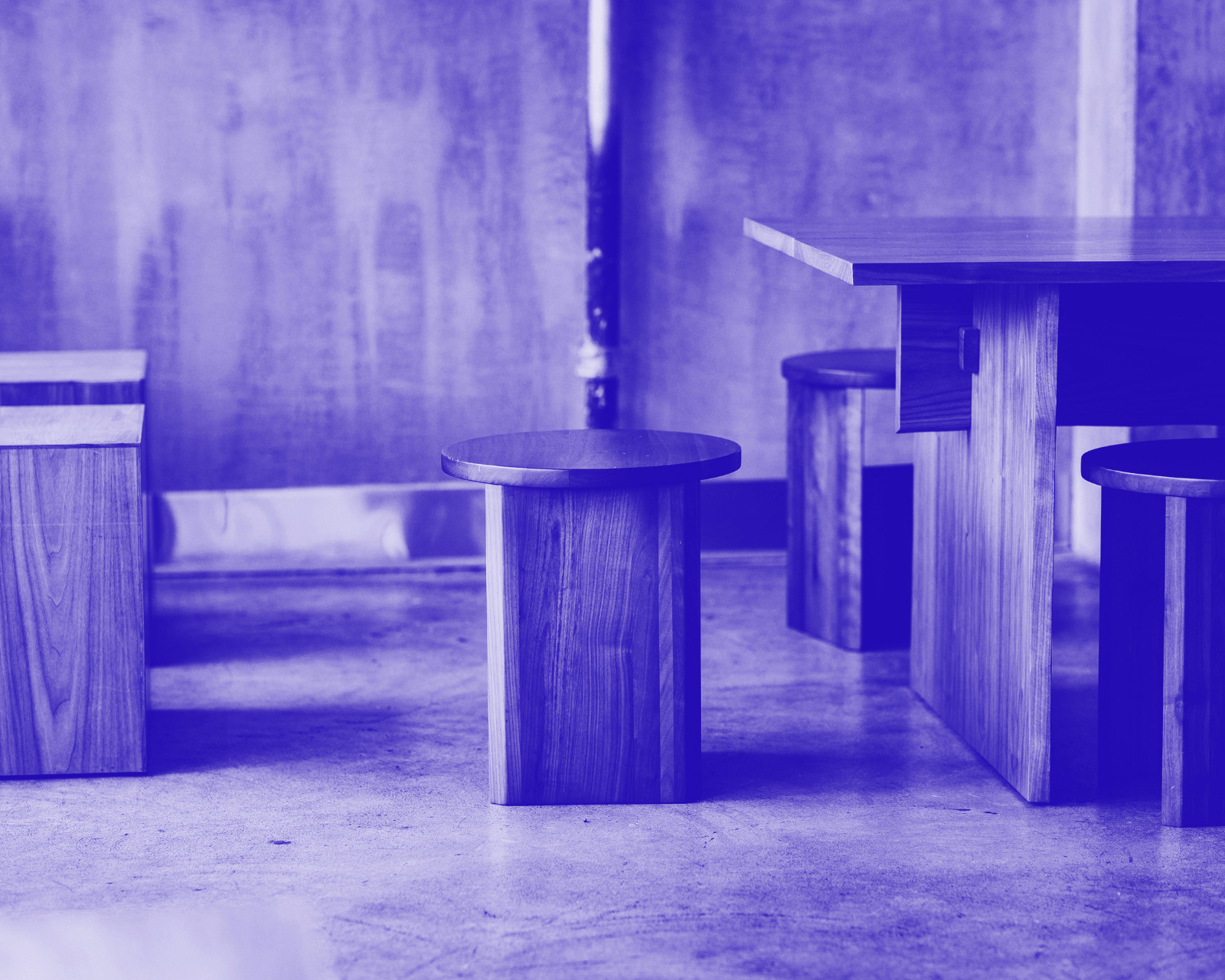
In a well-designed Scandinavian interior, wood doesn’t necessarily have to be everywhere. A beautiful teak sideboard, a dining table, or a few well-chosen chairs can be enough to create a Nordic feel.
2. Simple shapes, but never cold
Scandinavian minimalism is not synonymous with austerity.
Nordic designers have often focused on curves, proportions, and details to make furniture more inviting. Compass-style legs, rounded backs, sculpted armrests, and gently contoured tops, among other features, help introduce an organic quality.
It is this combination of geometric precision and soft, flowing lines that partly explains the enduring aesthetic appeal of many Scandinavian pieces.
3. A natural palette
White, beige, light gray, sand, and wood tones form a classic color palette.
But a Scandinavian interior doesn't have to be monochromatic. A darker vintage piece, a colorful textile, or an armchair in deep hues can create an interesting contrast.
The goal is rather to maintain a sense of balance and brightness.
4. Functionality Before Accumulation
In Scandinavian interior design, every piece of furniture must serve a purpose.
A sideboard provides storage while adding structure to a wall. A shelf displays a few carefully chosen items. A table serves as a gathering place for meals and conversation. An armchair creates a reading nook.
This approach is particularly effective when working with secondhand furniture: rather than filling a space with too many items, you can select a few standout pieces that can give an entire room its own identity.
How do you decorate an interior in the Scandinavian style?
Adopting the Scandinavian style doesn't mean buying only furniture from major Nordic retailers. On the contrary, mixing contemporary pieces, vintage furniture, and personal items helps create a more lively interior.
In the living room: Focus on a statement piece
The living room is the perfect place to feature a piece of Scandinavian furniture that becomes the focal point of the room.
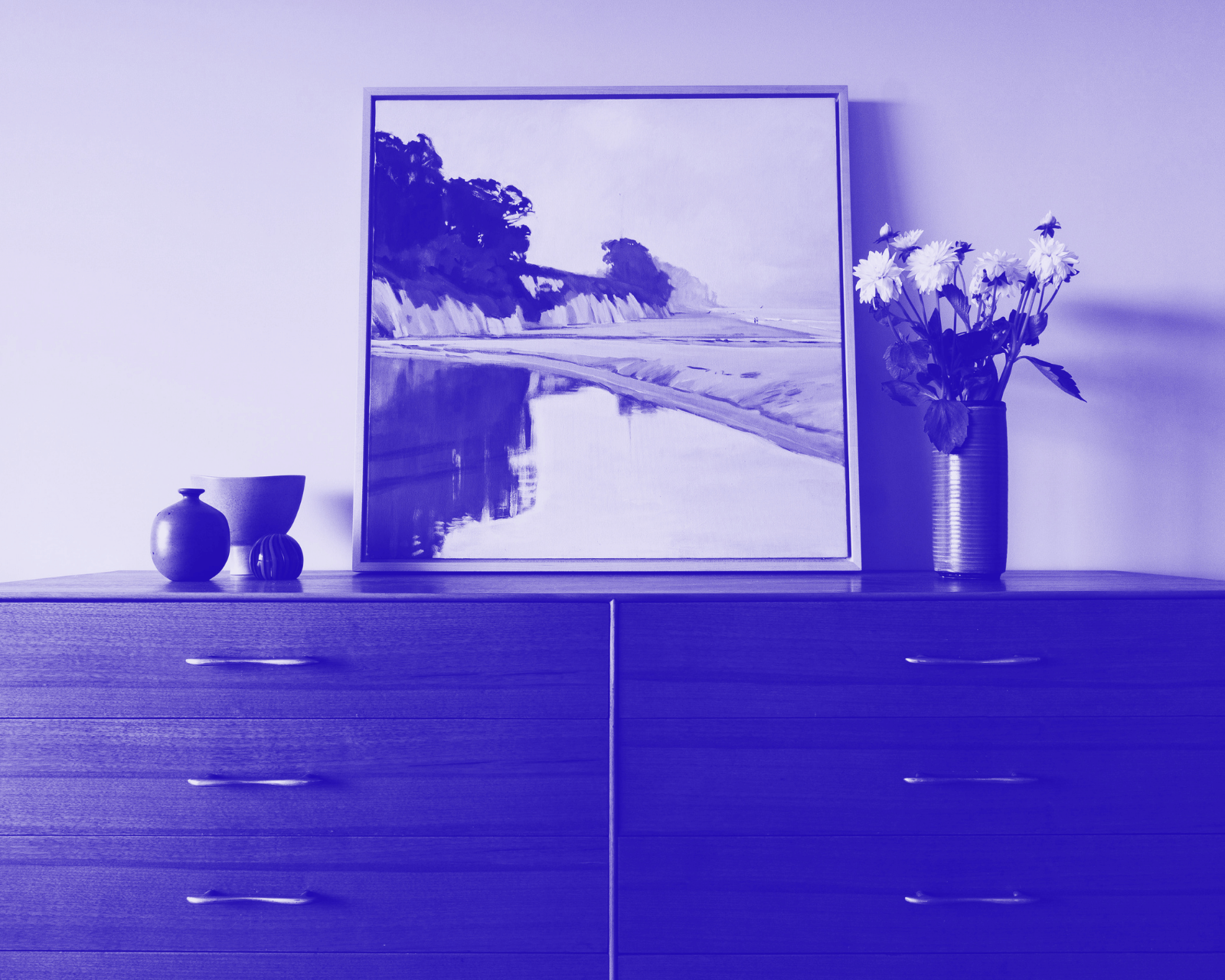
A beautiful vintage sideboard, for example, can serve as a focal point on a wall while providing storage space. A wooden armchair or a sofa with organic lines then rounds out the look.
To avoid the “catalog” effect, combine:
- a large wooden piece;
- a more contemporary fabric;
- a graphic lamp;
- a few personal items;
- a work of art or a photograph.
The contrast between old and new generally adds more character than a completely matching set.
In the dining room: focusing on seating
The table is, of course, the centerpiece of the dining room, but it is often the chairs that give the whole space its character.
Scandinavian design has a particularly rich history when it comes to seating. Hans J. Wegner, known as the “master of the chair,” designed nearly 500 models over the course of his career, including the famous CH24 Wishbone Chair, which has been in continuous production since 1950.
A wooden table can thus be paired with mismatched chairs or with several styles made from the same material. This approach helps maintain a sense of cohesion while avoiding a decor that’s too uniform.
In a bedroom: prioritize comfort
Scandinavian-style bedrooms focus more on a sense of calm than on decorative flair.
A wooden nightstand, a vintage dresser, a fabric headboard, and a few warm lamps may be all you need.
Materials play a key role here: wool, linen, cotton, wood, and ceramics create different textures without overwhelming the space.
In an entryway: Focus on functionality and first impressions
The entryway is often overlooked, even though it immediately sets the tone for the interior.
A small wooden console table, a mirror, a chair, and a few coat hooks can come together to form a simple and functional set.
For a commercial space, a hotel, or a vacation rental, this area can also become a true aesthetic signature. Scandinavian furniture works particularly well in these spaces because it combines warmth, comfort, and clarity.
7 Iconic Scandinavian Design Pieces You Should Know About
Nordic design has a particularly rich heritage. Some pieces have become true international icons.
1. The CH24 Wishbone Chair by Hans J. Wegner
Designed by Hans J. Wegner in 1949 and produced beginning in 1950, the CH24—also known as the Wishbone Chair or Y Chair—is one of the great icons of Danish design.
Its wooden frame and paper-cord seat perfectly exemplify the fusion of craftsmanship, functionality, and formal simplicity.
2. Arne Jacobsen's Series 7
Created in 1955, Arne Jacobsen’s Series 7 is recognizable by its molded shell and extremely light silhouette.
It represents another facet of Scandinavian design: one that combines industrial production, ergonomics, and sculptural expression.
Jacobsen is also the designer of the Ant Chair,the Egg Chair, and the Swan Chair—three iconic pieces of Danish design.
3. Alvar Aalto’s Stool 60
Created in 1933, the Stool 60 is a major landmark in Finnish design.
Its appeal goes far beyond its apparent simplicity: Alvar Aalto experimented with bentwood, among other things, and developed a technique for creating its distinctive legs.
This piece perfectly illustrates a fundamental principle of Nordic design: transforming a technical constraint into an aesthetic language.
4. The PH 5 Lamp by Poul Henningsen
Scandinavian design isn't just about furniture.
Poul Henningsen had a profound impact on the history of lighting with his research on light and glare. His PH 5 lamp, created in 1958, has become an icon of Danish design.
In an interior, an iconic light fixture can actually be enough to give a space a Scandinavian feel without adding a lot of Nordic furniture.
5. Arne Jacobsen’s Egg Chair
Designed in 1958 for the SAS Royal Hotel in Copenhagen, the Egg Chair represents the most sculptural aspect of Arne Jacobsen’s work.
Its enveloping shape immediately creates a sense of intimacy. It’s a particularly striking piece for a living room, hotel lobby, or lounge area.
6. Teak Furniture from the 1950s–1970s
In addition to pieces designed by renowned designers, vintage Scandinavian furniture includes a wide variety of pieces produced during the postwar decades.
Teak sideboards, buffets, tables, and dressers are particularly sought after for their proportions, their details, and the warmth of the wood.
It is precisely this type of furniture that makes it possible today to bring a Scandinavian style into a home without necessarily having to seek out an iconic piece.
7. Wooden Chairs and Seats
Vintage Scandinavian armchairs also make excellent starting points for interior design.
Exposed wood, enveloping shapes, and fabric upholstery help create a warm atmosphere while maintaining a relatively light silhouette.
Vintage Scandinavian Furniture: How to Avoid the “Generic Decor” Look?
This is probably one of the main challenges when trying to adopt the Scandinavian style today.
The success of Nordic design has made its style elements extremely accessible. The risk, therefore, is creating an interior where every element seems to come from the same collection.
To achieve a more personalized result, it's best to think in terms of combinations rather than sets.
Blending Eras
A vintage sideboard can complement a contemporary table perfectly.
Mixing Materials
Wood, stone, metal, wool, leather, and ceramics help prevent the decor from looking too uniform.
Install a safe
A designer armchair, an iconic lamp, or a large storage unit can serve as the central theme of the interior design.
Leave some space around the furniture
The Scandinavian style also relies on a certain sense of visual breathing room. A striking piece of furniture loses its impact when it is buried under a pile of objects.
Why choose secondhand Scandinavian furniture?
Vintage furniture allows you to go beyond the stereotypical image of Scandinavian style.
Each piece of furniture has its own patina, proportions, and history. A teak sideboard or a vintage armchair can therefore add more personality to a project than brand-new furniture.
This approach aligns with the philosophyof Atelier Rinovo, which selects furniture from across Europe based on its quality, uniqueness, and ability to blend into spaces unlike any other. The studio works primarily with secondhand pieces, while also seeking out new furniture that meets contemporary needs.
Atelier Rinovo's current Scandinavian collection includes chairs, armchairs, tables, nightstands, display cabinets, and several models of sideboards made of wood or teak.
Scandinavian style in a hotel, bed-and-breakfast, or restaurant
Nordic design is particularly well-suited for spaces open to the public.
In a hotel, it helps create an atmosphere that is immediately warm and familiar.
In a vacation rental, it creates a sense of comfort and simplicity while showcasing natural materials.
In a restaurant, chairs, tables, and lighting fixtures can create a distinct visual identity while meeting the demands of heavy use.
But for these projects, the real challenge isn't to replicate a "Scandinavian style" to the letter. It's about creating an atmosphere that is consistent with the history of the place.
This is the philosophy that guides Atelier Rinovo: furniture should help tell the story of a place and create an experience for those who live there or visit it.
How can you create a successful Scandinavian-style interior without falling into clichés?
Here's a simple rule: fewer references, more personality.
Instead of piling on Nordic design elements, choose a few key elements:
1. A statement piece of furniture
A sideboard, a table, an armchair, or a bookcase.
2. A Dominant Material
: Wood can serve as the unifying element of the space.
3. A cohesive color palette
A natural base, with a few carefully chosen contrasts.
4. Thoughtfully designed lighting
Table lamps, pendant lights, and indirect lighting all play a major role in creating the atmosphere.
5. Objects that tell a story
Books, artwork, ceramics, souvenirs, and vintage items help personalize a space.
6. Visual breathing room
Leaving space around furniture allows you to better appreciate its lines.
Scandinavian Furniture: A Blend of Tradition and Modernity
The enduring success of the Scandinavian style likely stems from a simple idea: a piece of furniture can be functional without being mundane, and aesthetically pleasing without being fragile or useless.
The designs of Wegner, Jacobsen, Aalto, and Henningsen continue to influence contemporary furniture because they strike a particularly balanced relationship between form, material, and function.
Today, this philosophy can be taken in a different direction: by combining iconic pieces, vintage furniture, contemporary designs, and personal items.
So the true Scandinavian style isn't necessarily one of a perfectly white interior filled with light wood and matching furniture.
Above all, it’s an interior designed to be lived in.
And when a piece of furniture also has a story behind it, is made of beautiful material, or has a unique patina, it becomes more than just a decorative element: it contributes to the identity of the space.
Check it out at Atelier Rinovo
To create an interior inspired by Nordic design, Atelier Rinovo offers a selection of Scandinavian furniture and distinctive pieces, sourced from across Europe and designed for unique interiors.
From sideboards to armchairs, including tables and chairs, the selection evolves as new finds are made.
Your home deserves a room that's unlike any other, too.